
Daytona Beach Mold Remediation
Homeowners cutting away water-damaged drywall encounter widespread black mold in wall cavities and struggle to determine if professional containment is necessary. Our licensed technicians establish sterile negative-pressure barriers and scrub airborne contaminants to protect unaffected living spaces. We eliminate hidden fungal roots and safely dry structural framing so your property remains healthy and secure.
For a Daytona Beach inspection, call (386) 555-0133.
Proven Environmental Remediation
Our technicians provide comprehensive structural water damage restoration to ensure damp building materials are fully remediated.
Our coastal subtropical climate sustains indoor relative humidity levels above 60 percent, allowing active mold colonies to form on damp drywall within 24 to 48 hours.
About 76% of local housing units (30,036 of 39,529) were built before 1980, the period when asbestos-containing materials and lead paint were still in use.
Public homeowner discussions frequently document how leaving flood-soaked drywall unmitigated causes extreme structural decay, progressing from pervasive black mold to active fungal fruiting bodies bursting through walls.
We carefully inspect exposed wall cavities and install industrial dehumidifiers to stabilize humidity before sealing stud bays.
Every project follows strict clearance protocols to ensure your indoor living environment is certified safe and free of airborne contaminants.
Step-by-Step Environmental Clearance
We systematically dry structural framing and handle complete flood cleanup before spores can spread through interior wall cavities.
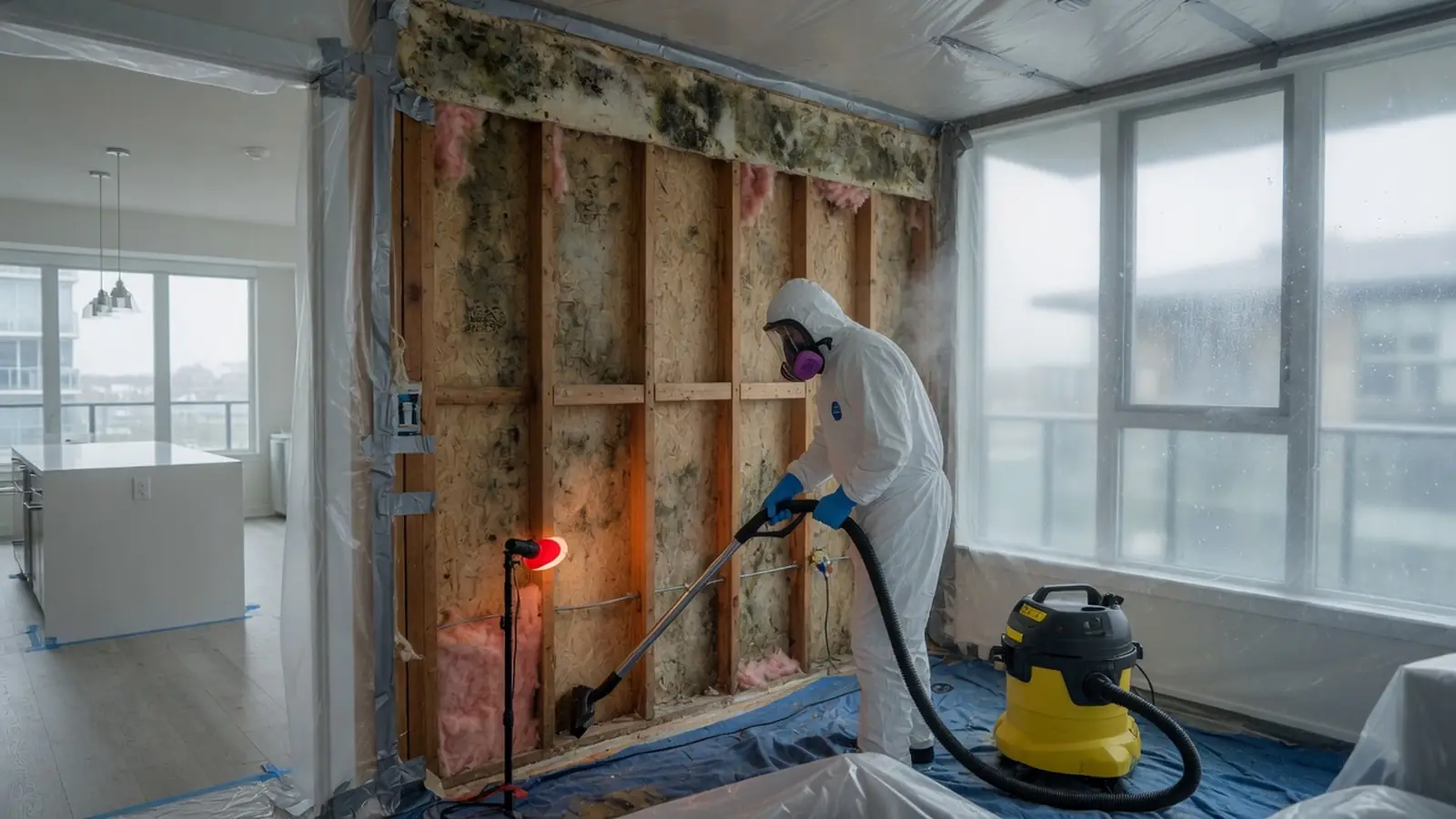
- Containment And Air Scrubbing. Remediation crews isolate affected zones with plastic poly sheeting and HEPA air scrubbers under negative pressure to keep spores from migrating to uninfected rooms. Technicians understand that stagnant flood dampness creates high airborne spore concentrations that pose severe respiratory risks, necessitating full PPE and containment for entry.
- Porous Material Removal. Bleach and surface biocides fail on porous drywall and insulation because fungal roots penetrate beneath the surface, requiring physical removal instead. We bag and discard compromised sheetrock in sealed disposal containers before cleaning framing.
- Antimicrobial Framing Treatment. Property owners seek guidance on appropriate antimicrobial disinfectants, fungicides, and encapsulants to treat exposed framing after tearing out flooded drywall. Our team deep-cleans framing timbers with hospital-grade biocides and applies protective encapsulants to resist future moisture.
- Moisture Mapping And Clearance. Homeowners discover hidden mold colonizing wall cavities and baseboards weeks after hurricane floodwaters recede, requiring professional moisture mapping to identify unseen dampness. We utilize penetrating probes and thermal cameras to ensure equilibrium drying before rebuilding commences.
Complete Structural Protection
We uphold rigorous environmental standards on every project, employing negative-pressure containment and certified HEPA filtration systems. When storm activity strikes coastal properties, our specialists manage rapid hurricane surge cleanup to halt dangerous fungal expansion immediately. Our team guarantees thorough physical removal of contaminated porous materials and applies commercial-grade encapsulants to protect exposed framing.
Ceiling And HVAC Condensate Remediation
Residents encounter ceiling and insulation saturation caused by clogged air conditioner condensate lines and worry about rapid toxic mold colonization. We extract saturated ceiling drywall, sanitize adjacent attic framing, and ensure HVAC drain lines flow freely.
Post-Flood Wall Cavity Remediation
Rising groundwater and storm surges saturate wall assemblies behind baseboards and insulation. We cut controlled flood cuts, extract hidden dampness with commercial dehumidifiers, and sanitize stud bays to prevent internal fungal colonization.
Structural Antimicrobial Encapsulation
Treating bare framing requires specialized fungicidal washes and penetrating encapsulants that lock out residual spore activity. We seal bare wood joists and wall studs to maintain long-term resistance against high coastal indoor humidity.
Our Commitment To Safe Restorations
We approach every water intrusion with disciplined containment protocols and thorough moisture verification to safeguard your indoor air quality and structural integrity.
- 12Zip Codes Served
- 8Service Areas
- 3Services Offered
Read authentic feedback from local property owners who trusted our crew to eliminate severe mold problems and restore healthy indoor living environments.
“Tropical squalls delayed our initial inspection by an entire afternoon, but the crew brought extra drying units the next morning to catch up. They worked late into the evening to strip out the rotted wallboard and scrubbed the framing until the moisture meters read normal. We stayed right on track despite the bad coastal weather.”
Marcus V.
“Our condo board was immediately suspicious about the industrial equipment running in the breezeway. The team showed them the negative air containment setup, quieted the duct exhaust, and kept common areas completely clean. Having contractors who handle strict HOA rules without causing friction was a huge relief.”
Brenda K.
“Six months have passed since the remediation was completed behind our bathroom vanity. Even through the heaviest summer humidity, there has not been a single musty odor or sign of spore regrowth. The wood seal on the studs held up beautifully and the air in our home feels completely fresh.”
Derrick T.
“Caring for my asthmatic mother meant we could not tolerate dust or harsh airborne chemicals drifting into the living quarters. The crew sealed the hallways with heavy zippered plastic and vented all scrubber exhaust directly outside to ensure her safety. She breathed comfortably throughout the entire three days of structural treatment.”
Loretta P.
Frequently Asked Questions
How quickly does mold begin to grow after indoor water damage?
Active mold colonies can begin growing on damp drywall and structural timber within 24 to 48 hours when indoor relative humidity levels exceed 60%.
Does spraying bleach completely kill mold on drywall and wood framing?
Bleach fails on porous drywall and insulation because fungal roots penetrate beneath surfaces, requiring complete physical removal instead.
How do remediation specialists prevent mold spores from spreading during cleanup?
Remediation crews isolate affected work zones using durable plastic poly sheeting and commercial HEPA air scrubbers operated under negative pressure.
Why is older housing stock particularly vulnerable during mold remediation projects?
Properties built prior to 1980 frequently contain hazardous lead paint or asbestos materials, requiring certified containment during demolition.
How do technicians detect hidden mold growth after severe coastal storm flooding?
Technicians deploy calibrated infrared moisture meters and deep cavity thermal sensors to identify damp framing concealed behind drywall.