
Daytona Beach Hurricane Surge Cleanup
When ocean tides inundate a property, homeowners dealing with significant indoor standing floodwater need urgent guidance on emergency water extraction, structural tear-out, and rapid mold prevention. Our specialized recovery crew deploys heavy pump units immediately to stop structural wood from deteriorating. We safeguard coastal residences by rapidly extracting brine and decontaminating affected structural framing.
Call (386) 555-0133 and we'll come look underneath with lights and meters.
Dedicated Coastal Recovery
For decades, our specialists have stabilized flood-damaged properties across the Atlantic barrier islands and peninsula communities.
Along the low-lying coastline, homeowners face recurring tidal and stormwater runoff threatening to breach the foundation slab and seek ways to divert rising water before interior flooding occurs.
A frequent pattern echoed in public discussions is that residents dealing with coastal storm surge are uncertain if saltwater-soaked drywall can be salvaged in place or requires immediate flood cuts to prevent mold growth.
Our technicians deliver comprehensive regional water damage restoration solutions designed to protect coastal properties from structural decay.
We thoroughly wash and decontaminate framing timber to eradicate corrosive minerals before closing up any wall cavity.
Restoring Flooded Coastal Homes
When ocean surge penetrates a home, initiating thorough emergency flood cleanup and structural drying stops corrosive salt water from ruining the building.
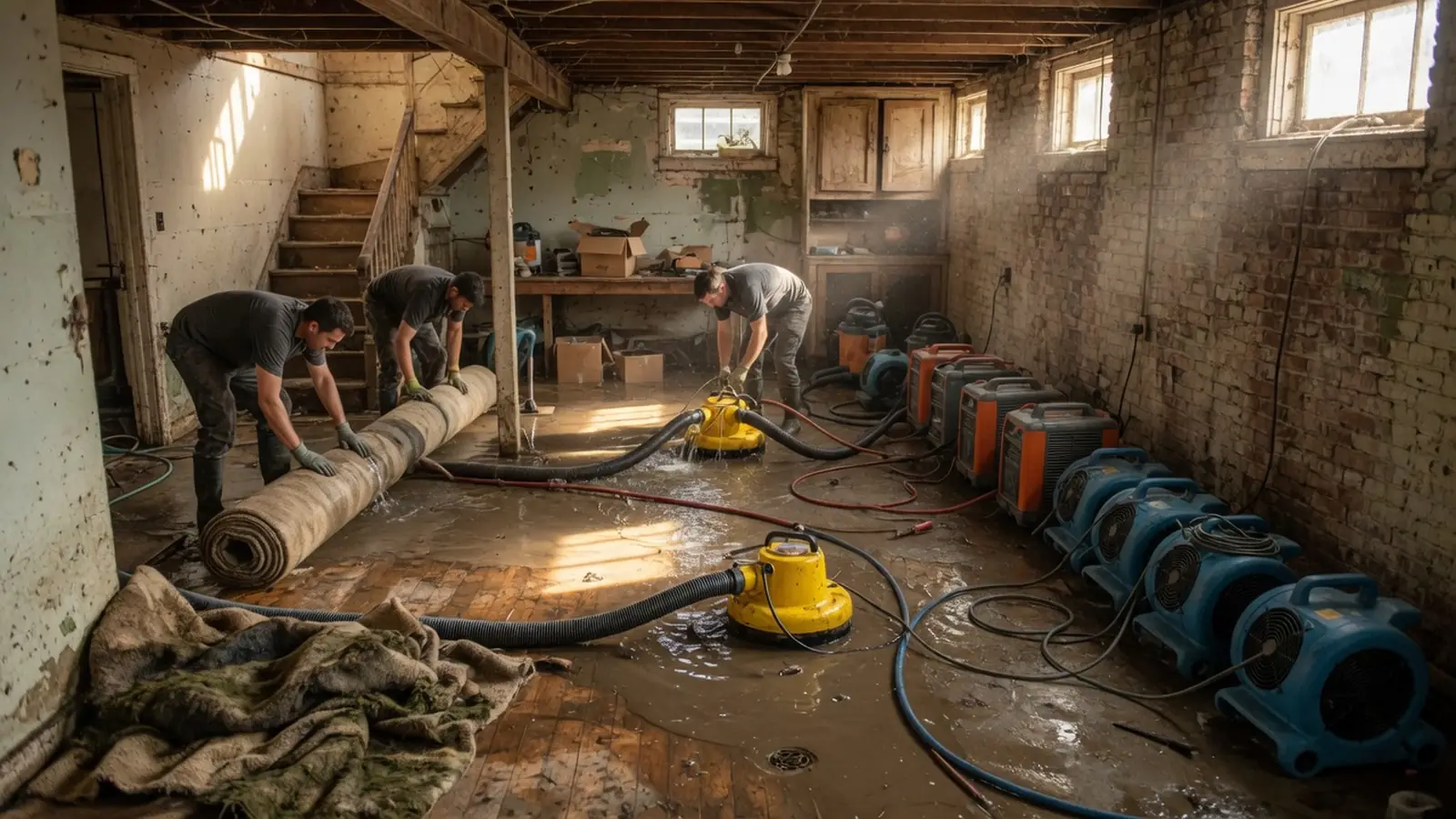
- Rapid Water Extraction. Our technicians deploy commercial submersible pumps and truck-mounted extractors to remove standing seawater from living areas, crawlspaces, and slabs.
- Targeted Flood Cuts. Homeowners often describe uncertainty where property owners question whether two-foot or four-foot flood cuts are strictly necessary after minor water intrusion or if industrial air movers and dehumidifiers can save the drywall. Because gypsum wicks seawater upward, we cut drywall well above the visible water line to expose framing for complete drying.
- Freshwater Rinsing. Saltwater surge requires immediate freshwater rinsing of framing and masonry because residual salt crystals continuously draw atmospheric moisture and corrode fasteners. We flush structural components with fresh water and apply EPA-registered antimicrobials to neutralize bacteria.
- Dehumidification & Mapping. Too often, homeowners discover hidden mold colonizing wall cavities and baseboards weeks after hurricane floodwaters recede, requiring professional moisture mapping to identify unseen dampness. We run industrial desiccant dehumidifiers and high-velocity air movers until timber moisture falls safely below fifteen percent.
Our Workmanship Standard
We follow strict containment and decontamination standards aligned with advanced local mold remediation protocols to ensure zero fungal resurgence behind treated framing. Our crews never take shortcuts with structural drying, using calibrated electronic meters to verify that framing reaches safe moisture equilibrium before releasing the property for finish work.
Submersible Water Pumping
When high storm tides inundate low-lying floors, our heavy-duty pumping equipment rapidly extracts thousands of gallons of standing water to relieve hydrostatic pressure against foundations.
Structural Stud Sanitizing
After storm surges recede, property owners uncover softened or stained structural framing after removing flooded sheetrock and need drying benchmarks, sanitizing steps, and sistering guidance. We disinfect wood surfaces and reinforce compromised wall studs to restore complete structural integrity.
Moisture Mapping & Testing
Using infrared thermography and pin-depth resistance meters, our specialists verify drying progress behind dense building materials to eliminate hidden pockets of dampness.
Our Approach To Coastal Disaster Recovery
We approach every flood cleanup with technical rigor and honesty. Our team operates commercial extraction equipment and calibrated moisture meters to return properties to safe, verifiable baselines without cutting corners.
- 11Zip Codes Served
- 8Service Areas
- 3Services Offered
Read authentic feedback from local property owners who trusted our specialists to pump out storm surge, flush salt water, and dry their structures following severe coastal flooding.
“After the Atlantic storm pushed salt water across our ground floor, the crew explained why pressure-treated bottom plates and closed-cell insulation would withstand future moisture far better than standard materials. Their clear guidance on moisture-resistant wallboard saved us from having to redo the framing later. The work was finished thoroughly and cleanly.”
Marcus T.
“Another contractor gave us a cheaper quote that only included pumping standing water without flushing the framing fasteners. This company took the extra step to rinse out the corrosive ocean salt and test every wall cavity with moisture meters before closing anything up. Choosing them prevented massive rot down the line.”
Elena R.
“When county inspectors checked the structural repairs following the tidal flood, every flood-cut measurement and sistered stud passed without a single revision. The crew managed the local elevation compliance paperwork smoothly from start to finish. We appreciated how organized and informed they were throughout the whole inspection process.”
David K.
“Our living room took on seawater late on a Saturday evening during high tide, but the team answered our call immediately and had extraction pumps running within the hour. Having someone explain how to protect the subfloor over the weekend kept our anxiety at bay. Their prompt arrival kept structural warping to an absolute minimum.”
Sarah B.
Frequently Asked Questions
Can carpet and padding be saved after an overland flood, or do porous flooring materials always require full disposal?
Porous carpet and padding exposed to overland floodwaters cannot be saved and require full disposal to eliminate dangerous contamination risks. Storm surge carries Category 3 black water laden with silt, sewage, and chemical residues. Discarding soaked carpets immediately prevents bacterial growth and secondary mold colonization.
Can saltwater-soaked drywall be dried in place, or are flood cuts always necessary?
Drywall soaked by ocean storm surge cannot be salvaged in place and requires immediate flood cuts to stop mold growth inside wall cavities. Gypsum wicks saltwater rapidly up the wall studs. Cutting sheetrock two to four feet above the waterline exposes the wet framing for freshwater rinsing and industrial dehumidification.
Why is freshwater rinsing mandatory after saltwater flood damage?
Freshwater rinsing is necessary because dried ocean salt crystals continuously absorb humidity and rapidly corrode metal structural fasteners. Leaving salt deposits on timber and concrete leads to chronic indoor dampness and structural connector failure. A pressurized clean water rinse removes saline residues before drying begins.
How are water-damaged wall framing studs repaired and sanitized?
Water-damaged studs are pressure washed with clean water, treated with antimicrobial agents, dried thoroughly, and sistered if wood is weakened. Wood moisture content must reach below fifteen percent before rebuilding starts. When structural timber exhibits softening or fiber degradation, installing sistered framing restores full structural load capacity.
How do you detect hidden moisture behind walls after storm flooding?
Specialists utilize infrared thermal imaging cameras and deep-penetrating moisture meters to map trapped dampness without damaging walls. Moisture mapping identifies damp wall cavities and subfloors where mold would otherwise spread unnoticed. Periodic readings verify structural drying progress.