
Daytona Beach Flood Cleanup
Properties facing storm surge from the Halifax River or coast require commercial desiccant dehumidifiers rather than standard units due to extreme outdoor humidity. Technicians make flood cuts at least 12 to 24 inches above the highest water line to prevent moisture and hidden microbial growth inside wall cavities. Our certified crews respond immediately to extract standing water, protect original building assemblies, and restore healthy living conditions.
When it's safe to go back in, call (386) 555-0133.
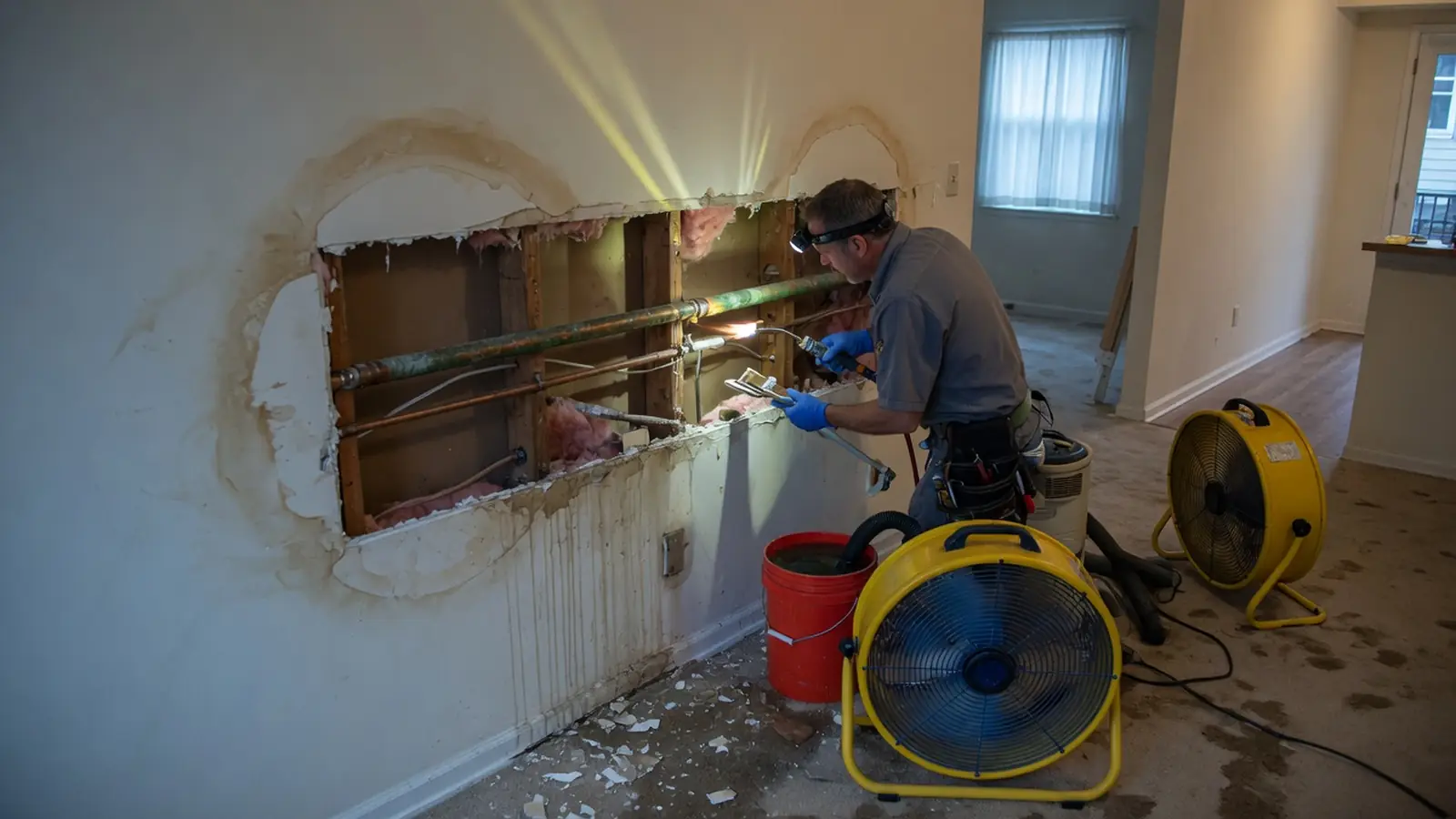
Restoring Coastal Properties After Severe Water Intrusion
When unexpected water enters your property, partnering with our dedicated water damage restoration team ensures structural elements are preserved.
The median owner-occupied home locally was built in 1979 (Census ACS 5-year), meaning many residential properties have older subfloor assemblies and building envelopes.
The surrounding community has 39,529 housing units on record in the Census ACS 5-year estimates, representing a diverse coastal housing stock.
About 17% of housing units locally (6,574 of 39,529) were built since 2000, so a substantial share of the local stock is still on its original systems.
Sandy soils make up roughly 75% of the top mapped acreage around the area (including Myakka-Myakka, wet, fine sands, 0 to 2 percent slopes, Pomona fine sand), which drains quickly and shifts the local problem from heave toward water movement and erosion.
Standing freshwater trapped under laminate or vinyl plank flooring saturates the subfloor adhesive, causing buckling and requiring complete material removal.
Homeowners observe dark staining and persistent moisture across concrete slab floors and need diagnosis to differentiate between ground seepage, slab sweating, and mold growth.
A pattern echoed in public discussions is that occupants question whether running commercial air movers and dehumidifiers continuously for several days is standard flood drying protocol or indicative of equipment failure.
Our technicians maintain industrial drying systems continuously until moisture meters confirm that interior humidity and wall materials have reached dry standard baseline levels.
Our Systematic Water Extraction And Drying Process
We deploy commercial equipment immediately to halt migration, dry building assemblies, and sanitize living spaces. When handling complex hurricane surge cleanup projects, our certified technicians establish negative pressure barriers to safeguard unaffected living areas.
- Emergency Inspection And Moisture Mapping. Technicians deploy infrared cameras and penetrating probes to track moisture depth across walls, slabs, and subfloors. Trade videos and multi-family case studies emphasize that condominium moisture mapping must be repeated over several days as trapped water in shared structural assemblies continuously migrates into adjacent units.
- Rapid Extraction And Demolition Cuts. Crews extract standing water rapidly before performing structural material removal. As highlighted in professional restoration guidelines, aggressive early flood cuts to baseboards and drywall take priority over salvage efforts to stop secondary mold colonization within saturated wall cavities. Technicians make flood cuts at least 12 to 24 inches above the highest water line to prevent moisture and hidden microbial growth inside wall cavities.
- Industrial Desiccant Dehumidification. Properties facing storm surge from the Halifax River or coast require commercial desiccant dehumidifiers rather than standard units due to extreme outdoor humidity. Technicians position high-velocity air movers to sweep moisture from framing while desiccants draw absolute humidity down to safe restoration targets.
- Antimicrobial Treatment And Verification. Crews apply EPA-registered antimicrobials across framing, foundation slabs, and studs to stop fungal growth. Final documentation confirms all structural elements have reached equilibrium moisture content before reconstruction begins.
Disciplined Structural Drying And Containment
Every flood mitigation project follows rigorous structural drying protocols rather than quick surface cleanups. Standing freshwater trapped under laminate or vinyl plank flooring saturates the subfloor adhesive, causing buckling and requiring complete material removal down to the concrete. If you require certified mold remediation services after prolonged dampness, our crew sanitizes framing and applies antimicrobial barriers to protect your indoor environment.
Standing Water Extraction
Truck-mounted extractors quickly pump out standing floodwaters from living areas, garages, and crawlspaces. Removing standing pool depth within the first hours stops water from saturating subflooring and framing.
Structural Flood Cuts
Technicians make flood cuts at least 12 to 24 inches above the highest water line to prevent moisture and hidden microbial growth inside wall cavities. Removing contaminated drywall and wet insulation allows wood studs to dry thoroughly under controlled airflow.
Slab And Subfloor Decontamination
Homeowners observe dark staining and persistent moisture across concrete slab floors and need diagnosis to differentiate between ground seepage, slab sweating, and mold growth. Our crew removes degraded adhesives, cleans concrete surfaces, and applies antimicrobial solutions.
Our Commitment To Rapid Flood Response
Our mitigation crews arrive fully equipped with high-capacity desiccant dehumidifiers, extraction pumps, and calibrated moisture sensors to stabilize flooded properties quickly and thoroughly.
- 12Zip Codes Served
- 6Service Areas
- 3Services Offered
Read genuine feedback from property owners who relied on our crew to pump out floodwaters, dry interior framing, and protect their homes.
“We got an initial estimate from an outfit that claimed they could simply dry our baseboards in place, but this crew demonstrated that water had already wicked two feet up the sheetrock. Choosing them cost slightly more upfront, but their thorough extraction saved our wall framing from rot. I shudder to think of the hidden mold we would have faced if we had chosen the cheap alternative.”
Marcus T.
“Navigating local building department guidelines for structural tear-outs after storm flooding was completely overwhelming until the team stepped in. They cataloged every cut, documented moisture readings for code compliance, and secured the municipal clearance without a hitch. The city inspector passed the remediation on the very first walkthrough.”
Elena R.
“Our ground floor began taking on runoff late on a Sunday evening during heavy rainfall. The crew answered our midnight dispatch call immediately and had heavy extraction equipment pumping out the living area within forty-five minutes. Their prompt weekend intervention kept the damage from spreading into our rear bedrooms.”
Greg H.
“When they performed the flood cuts along our hallway drywall, their lines were laser-straight and exactly twenty-four inches off the slab. The clean cuts made hanging replacement sheetrock completely seamless, and they left the exposed slab spotless without a trace of leftover adhesive. You could tell immediately that these technicians take immense pride in their workmanship.”
Valerie S.
Frequently Asked Questions
How quickly must flood cleanup begin to prevent mold growth?
Professional flood mitigation should start within 24 to 48 hours to stop active microbial colonization inside damp wall cavities and subflooring. Technicians make flood cuts at least 12 to 24 inches above the highest water line to prevent moisture and hidden microbial growth inside wall cavities. Removing wet drywall and extracting standing water halts structural rot and protects indoor air quality.
Why must buckled laminate or vinyl flooring be removed after flooding?
Trapped water under laminate or vinyl plank saturates subfloor adhesive, causing severe buckling and requiring complete material removal. Standing freshwater trapped under laminate or vinyl plank flooring saturates the subfloor adhesive, causing buckling and requiring complete material removal. This allows the underlying concrete foundation to dry properly under commercial dehumidification.
Why are desiccant dehumidifiers necessary for coastal flood drying?
Coastal storm surge conditions produce extreme outdoor humidity, requiring commercial desiccant dehumidifiers rather than standard condenser units. Desiccant units pull air to significantly lower grains of moisture per pound, ensuring structural timber and concrete release deeply embedded water despite saturated marine outdoor air.
What causes dark staining on concrete slabs following flood events?
Homeowners observe dark staining and persistent moisture across concrete slabs, needing diagnosis to separate seepage, sweating, and mold growth. Technicians use non-invasive moisture meters and relative humidity probes to identify whether concrete is transmitting ground moisture through capillary action or suffering from surface condensation.
How long does professional structural drying usually take?
Complete structural drying typically requires three to five days of continuous commercial air mover and industrial dehumidifier operation. Running commercial drying equipment continuously ensures all moisture trapped within studs, sill plates, and concrete reaches normal equilibrium moisture content before reconstruction starts.